

Madurai Sungudi GI Tag: The Complete Guide to Tamil Nadu’s Heritage Saree
Madurai Sungudi is one of India’s most celebrated traditional textile arts, known for its intricate tie-and-dye craftsmanship, lightweight cotton fabric, and centuries-old cultural heritage. Originating in the historic city of Madurai, Sungudi sarees have become a symbol of Tamil Nadu’s rich handloom tradition.
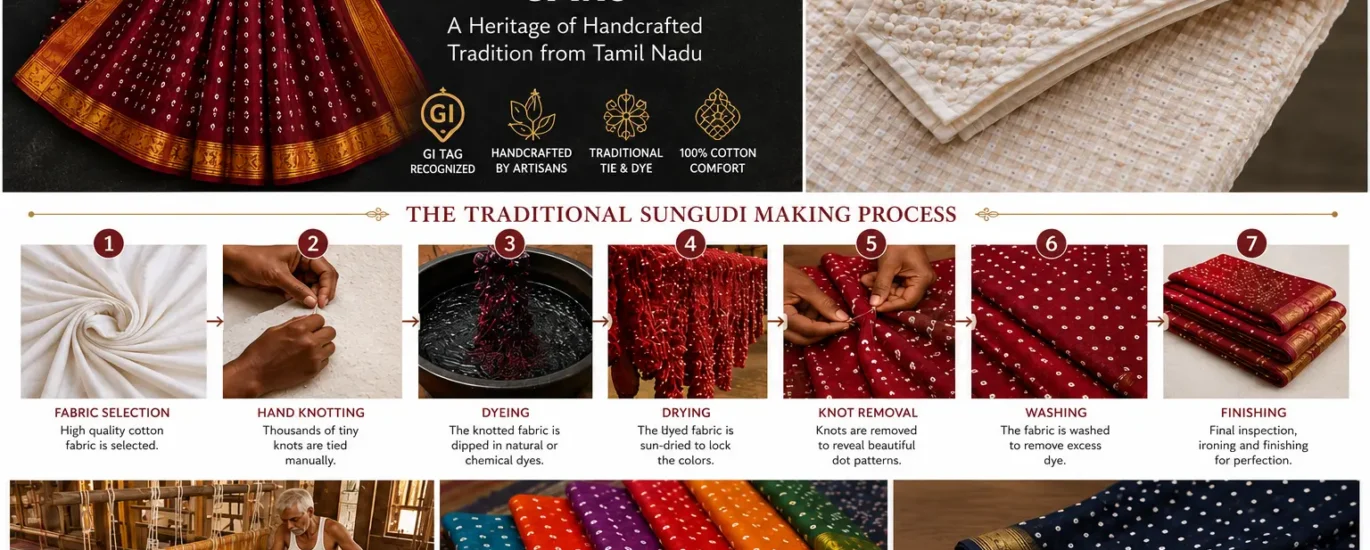
The uniqueness of Madurai Sungudi lies in its handcrafted tie-and-dye process, where thousands of tiny knots are tied manually before dyeing, creating distinctive dotted patterns that make every saree unique.
To protect this traditional craft and preserve its heritage, Madurai Sungudi was granted Geographical Indication (GI) status in India.
In this guide, you’ll learn:
- What Madurai Sungudi is
- The history of Sungudi sarees
- What a GI Tag means
- Madurai Sungudi GI registration details
- Traditional manufacturing process
- How to identify authentic Sungudi sarees
- Why Sungudi remains popular today
- Frequently asked questions
What is Madurai Sungudi?
Madurai Sungudi is a traditional cotton saree produced using a unique tie-and-dye technique practiced in and around Madurai for generations.
The term “Sungudi” is believed to be derived from the word referring to the knotting process used during dyeing. The saree is recognized for:
- Thousands of hand-tied dots
- Vibrant colours
- Lightweight cotton fabric
- Comfortable drape
- Traditional motifs
- Distinctive borders and pallus
Unlike mass-produced printed fabrics, authentic Sungudi sarees involve extensive manual work that requires skill, patience, and years of experience.
The History of Madurai Sungudi
The history of Sungudi is closely connected to the migration of Saurashtrian communities to Madurai several centuries ago.
These skilled artisans brought advanced textile knowledge, dyeing techniques, and weaving traditions that gradually evolved into what is now known as Madurai Sungudi.
Over time, Sungudi became an integral part of Tamil Nadu’s cultural identity.
For generations, women across South India have worn Sungudi sarees for:
- Daily wear
- Religious ceremonies
- Festivals
- Family functions
- Temple visits
Its breathable cotton fabric made it especially suitable for the warm climate of southern India.
What is a Geographical Indication (GI) Tag?
A Geographical Indication (GI) is a form of intellectual property protection that identifies products originating from a specific geographical location and possessing qualities, reputation, or characteristics associated with that region.
GI protection helps:
- Preserve traditional craftsmanship
- Prevent misuse of product names
- Protect artisan livelihoods
- Promote regional heritage
- Ensure authenticity
Many famous Indian products have GI status, including:
- Darjeeling Tea
- Basmati Rice
- Kanchipuram Silk Saree
- Mysore Silk
- Madurai Sungudi
Madurai Sungudi GI Registration Details
Madurai Sungudi received Geographical Indication recognition to preserve its unique identity and traditional production methods.
Registration Information
| Particular | Details |
|---|---|
| Product Name | Madurai Sungudi |
| Product Type | Textile |
| State | Tamil Nadu |
| Region | Madurai |
| GI Application Number | 21 |
| Registration Date | 12 December 2005 |
| Category | Handloom Textile |
This recognition acknowledges the historical significance and uniqueness of Madurai Sungudi craftsmanship.
Why Madurai Sungudi Received GI Status
Madurai Sungudi earned GI recognition because of several distinctive features:
1. Traditional Tie-and-Dye Process
The characteristic dotted patterns are created through manual knotting rather than machine printing.
2. Regional Heritage
The craft is deeply rooted in the Madurai region and has been practiced for generations.
3. Skilled Artisan Work
Creating authentic Sungudi requires expertise developed over years of training.
4. Cultural Importance
Sungudi is an important part of Tamil Nadu’s textile heritage.
The Traditional Sungudi Manufacturing Process
One of the reasons Sungudi remains special is the labour-intensive process involved in its creation.
Step 1: Fabric Selection
High-quality cotton fabric is selected for production.
The fabric must:
- Absorb dyes effectively
- Remain lightweight
- Offer comfort in tropical climates
Step 2: Washing and Preparation
The fabric is thoroughly cleaned and prepared before dyeing.
This stage removes impurities and ensures consistent colour absorption.
Step 3: Hand Knotting
This is the most distinctive stage.
Artisans manually tie thousands of tiny knots across the fabric.
Depending on the design, a single saree may contain thousands of individually tied points.
This process demands:
- Precision
- Speed
- Experience
- Patience
Step 4: Dyeing
The tied fabric is immersed in dye solutions.
The tied portions resist the dye, creating the characteristic dotted patterns.
Step 5: Drying
The dyed fabric is carefully dried.
Proper drying helps maintain colour quality and durability.
Step 6: Knot Removal
After drying, the knots are removed.
The hidden portions reveal intricate patterns and distinctive designs.
Step 7: Finishing
The saree undergoes final finishing, inspection, and preparation for sale.
What Makes Authentic Sungudi Different?
Authentic Sungudi is more than just a printed pattern.
Key characteristics include:
Handcrafted Dot Patterns
The dots are created through manual knotting.
Traditional Dyeing
Colours penetrate the fabric naturally during dyeing.
Artisan Craftsmanship
Every saree reflects the skill of the artisan.
Cultural Heritage
Each piece carries generations of textile tradition.
How to Identify an Original Sungudi Saree
Many consumers find it difficult to distinguish authentic Sungudi from machine-made imitations.
Here are practical ways to identify genuine Sungudi:
Check the Dot Pattern
Authentic Sungudi contains thousands of tiny tie-and-dye dots.
Machine prints often appear too uniform.
Look for Handmade Variations
Small irregularities are natural signs of handcraftsmanship.
Examine Colour Penetration
Traditional dyeing usually produces better colour depth than surface printing.
Verify Seller Transparency
Reputable sellers provide information about:
- Origin
- Artisans
- Manufacturing process
Ask Questions
A trustworthy seller should be able to explain:
- Where the saree was made
- The technique used
- Artisan involvement
Why Women Love Sungudi Sarees
Sungudi sarees continue to be popular because they combine tradition with practicality.
Comfortable for Daily Wear
The lightweight cotton fabric is breathable and suitable for warm weather.
Elegant Appearance
Traditional motifs and colours offer timeless appeal.
Easy Maintenance
Cotton Sungudi sarees are generally easy to care for when handled properly.
Suitable for Multiple Occasions
They can be worn for:
- Office wear
- Temple visits
- Casual gatherings
- Festivals
- Family functions
The Cultural Importance of Sungudi
Madurai Sungudi is not merely a garment.
It represents:
- Traditional knowledge
- Artisan livelihoods
- Cultural identity
- Regional heritage
By supporting authentic Sungudi products, customers help preserve a craft that has survived for centuries.
Supporting Traditional Artisans
Behind every Sungudi saree are skilled artisans whose expertise has been passed down through generations.
Preserving this craft helps:
- Sustain artisan families
- Encourage traditional skills
- Protect cultural heritage
- Promote handmade textiles
At Sungudi.com, we are committed to celebrating and supporting the artisans who keep this tradition alive.
Why Buy Sungudi Sarees Online?
Online platforms make it easier than ever to access authentic heritage textiles.
Benefits include:
- Wider selection
- Detailed product information
- Direct access to traditional designs
- Convenience of home delivery
However, buyers should always choose trusted sellers who provide transparency about sourcing and craftsmanship.
Frequently Asked Questions
Is Madurai Sungudi GI Tagged?
Yes. Madurai Sungudi is a registered Geographical Indication (GI) product of Tamil Nadu.
What is special about Sungudi sarees?
Their handcrafted tie-and-dye process, lightweight cotton fabric, and distinctive dotted patterns.
Where is Sungudi made?
Traditionally in and around Madurai, Tamil Nadu.
Is Sungudi handloom?
Many authentic Sungudi products are associated with traditional handloom and artisan-based production methods.
How can I identify an original Sungudi saree?
Check for tie-and-dye dots, handmade characteristics, artisan information, and seller transparency.
Why are Sungudi sarees popular in South India?
Their breathable cotton fabric makes them comfortable for warm climates while preserving traditional aesthetics.
Are Sungudi sarees suitable for daily wear?
Yes. Their lightweight and comfortable nature makes them suitable for regular use.
How should I wash a Sungudi saree?
Follow the care instructions provided with the product. Gentle washing and proper drying help preserve colour and fabric quality.
Preserving a Living Heritage
Madurai Sungudi stands as a remarkable example of India’s textile heritage. Its distinctive tie-and-dye technique, cultural significance, and artisan craftsmanship continue to inspire generations of saree lovers.
As awareness of sustainable and handmade textiles grows, authentic Sungudi sarees remain a meaningful choice for those who appreciate tradition, craftsmanship, and timeless elegance.
Whether you are discovering Sungudi for the first time or adding another masterpiece to your collection, every authentic Sungudi saree carries a story woven through generations of artisans, culture, and heritage.