
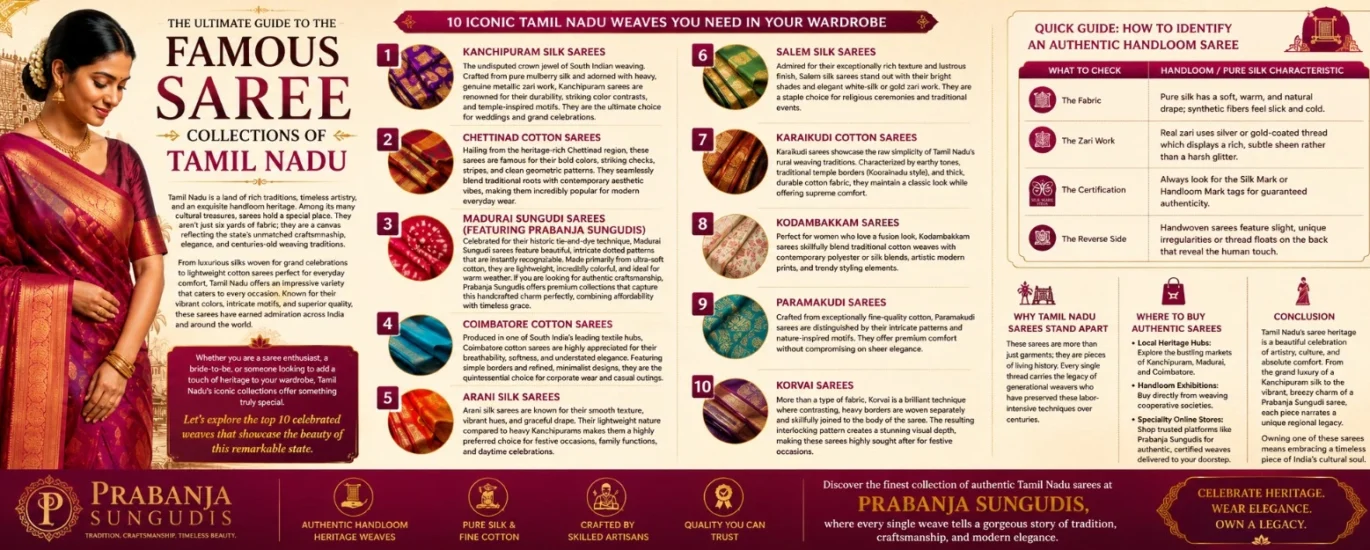
Tamil Nadu is a land of rich traditions, timeless artistry, and an exquisite handloom heritage. Among its many cultural treasures, sarees hold a special place. They aren’t just six yards of fabric; they are a canvas reflecting the state’s unmatched craftsmanship, elegance, and centuries-old weaving traditions.
From luxurious silks woven for grand celebrations to lightweight cotton sarees perfect for everyday comfort, Tamil Nadu offers an impressive variety that caters to every occasion. Known for their vibrant colors, intricate motifs, and superior quality, these sarees have earned admiration across India and around the world.
Whether you are a saree enthusiast, a bride-to-be, or someone looking to add a touch of heritage to your wardrobe, Tamil Nadu’s iconic collections offer something truly special. Let’s explore the top 10 celebrated weaves that showcase the beauty of this remarkable state.
10 Iconic Tamil Nadu Weaves You Need in Your Wardrobe
1. Kanchipuram Silk Sarees
The undisputed crown jewel of South Indian weaving. Crafted from pure mulberry silk and adorned with heavy, genuine metallic zari work, Kanchipuram sarees are renowned for their durability, striking color contrasts, and temple-inspired motifs. They are the ultimate choice for weddings and grand celebrations.
2. Chettinad Cotton Sarees
Hailing from the heritage-rich Chettinad region, these sarees are famous for their bold colors, striking checks, stripes, and clean geometric patterns. They seamlessly blend traditional roots with contemporary aesthetic vibes, making them incredibly popular for modern everyday wear.
3. Madurai Sungudi Sarees
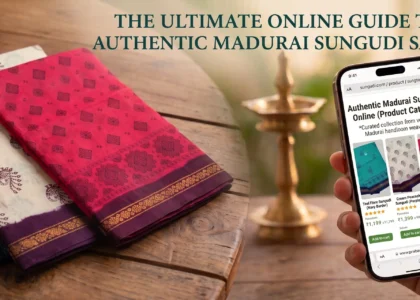
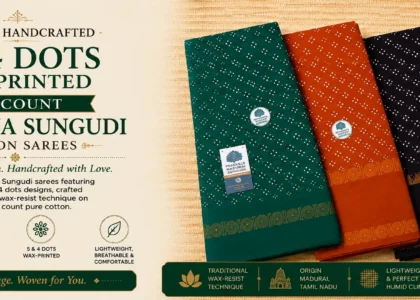
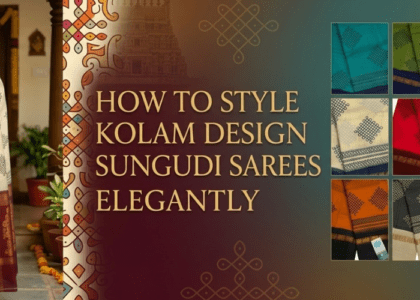
Celebrated for their historic tie-and-dye technique, Madurai Sungudi sarees feature beautiful, intricate dotted patterns that are instantly recognizable. Made primarily from ultra-soft cotton, they are lightweight, incredibly colorful, and ideal for warm weather. The technique — tiny sections of cotton fabric are pinched, tied, and dyed by hand — produces small circular motifs that are never perfectly uniform, which is actually the mark of genuine handwork rather than a flaw. Made from lightweight, breathable cotton, they’re especially suited to warm, humid climates.
4. Coimbatore Cotton Sarees
Produced in one of South India’s leading textile hubs, Coimbatore cotton sarees are highly appreciated for their breathability, softness, and understated elegance. Featuring simple borders and refined, minimalist designs, they are the quintessential choice for corporate wear and casual outings.
5. Arani Silk Sarees
Arani silk sarees are known for their smooth texture, vibrant hues, and graceful drape. Their lightweight nature compared to heavy Kanchipurams makes them a highly preferred choice for festive occasions, family functions, and daytime celebrations.
6. Salem Silk Sarees
Admired for their exceptionally rich texture and lustrous finish, Salem silk sarees stand out with their bright shades and elegant white-silk or gold zari work. They are a staple choice for religious ceremonies and traditional events.
7. Karaikudi Cotton Sarees
Karaikudi sarees showcase the raw simplicity of Tamil Nadu’s rural weaving traditions. Characterized by earthy tones, traditional temple borders (Koorainadu style), and thick, durable cotton fabric, they maintain a classic look while offering supreme comfort.
8. Kodambakkam Sarees
Perfect for women who love a fusion look, Kodambakkam sarees skillfully blend traditional cotton weaves with contemporary polyester or silk blends, artistic modern prints, and trendy styling elements.
9. Paramakudi Sarees
Crafted from exceptionally fine-quality cotton, Paramakudi sarees are distinguished by their intricate patterns and nature-inspired motifs. They offer premium comfort without compromising on sheer elegance.
10. Korvai Sarees
More than a type of fabric, Korvai is a brilliant technique where contrasting, heavy borders are woven separately and skillfully joined to the body of the saree. The resulting interlocking pattern creates a stunning visual depth, making these sarees highly sought after for festive occasions.
Quick Guide: How to Identify an Authentic Handloom Saree
When investing in a traditional weave, authenticity is everything. Keep these quick checks in mind:
| What to Check | Sign of a Genuine Handloom / Pure Silk Saree |
|---|---|
| The Fabric | Pure silk has a soft, warm, and natural drape; synthetic fibers feel slick and cold. |
| The Zari Work | Real zari uses silver or gold-coated thread which displays a rich, subtle sheen rather than a harsh glitter. |
| The Certification | Always look for the Silk Mark or Handloom Mark tags for guaranteed authenticity. |
| The Reverse Side | Handwoven sarees feature slight, unique irregularities or thread floats on the back that reveal the human touch. |
Why These Weaves Still Matter
Each of these sarees represents generations of accumulated skill. Many of these techniques take years to master, and the weaving communities behind them are often small, regional, and increasingly competing with mass-produced imitations sold under the same names. Supporting genuine handloom — whether through local cooperatives, certified retailers, or heritage exhibitions — is part of what keeps these traditions alive.
Where to Experience These Sarees
-
- Local heritage hubs — the markets of Kanchipuram, Madurai, and Coimbatore remain the most immersive way to see these weaves in person.
-
- Handloom exhibitions — government-backed textile expos often let you buy directly from weaving cooperatives.
-
- Certified online retailers — look for sellers who are transparent about weaver sourcing, fabric composition, and certification, rather than generic “traditional saree” listings.
FAQs
What is the difference between Kanchipuram and Sungudi sarees?
Kanchipuram sarees are heavy silk weaves with genuine zari borders, traditionally worn for weddings and grand celebrations. Sungudi sarees, by contrast, are lightweight cotton with a hand tie-dye dotted pattern, making them better suited for everyday wear or warm, humid climates.
What does “Korvai” mean in saree weaving?
Korvai refers to a weaving technique, not a fabric type. The saree’s border is woven separately from its body and then interlocked together during the weaving process, creating a distinct visual join and added durability at the seam.
How can I tell if a silk or cotton saree is genuine handloom?
Look for a Silk Mark or Handloom Mark certification tag, check that the fabric has a soft, natural drape rather than a slick synthetic feel, and inspect the reverse side for slight thread irregularities — a sign of handwoven, not machine-made, fabric.
Which Tamil Nadu saree is best suited for everyday or office wear?
Coimbatore cotton and Chettinad cotton sarees are both popular choices for daily wear, thanks to their lightweight, breathable fabric and simple, understated designs compared to heavier silk weaves.
Final Thoughts
Tamil Nadu’s saree traditions are less about fashion trends and more about cultural continuity — six yards of fabric that carry centuries of technique, regional identity, and craftsmanship. Whether you gravitate toward the grandeur of a Kanchipuram silk or the everyday charm of a Sungudi cotton, each weave tells a distinct part of the state’s story.
Prabanja Sungudi has been sourcing directly from Madurai’s handloom weaving community for years, specializing in authentic Sungudi sarees. Read more saree guides at sungudi.com/blog.