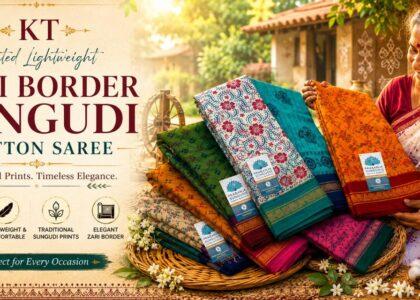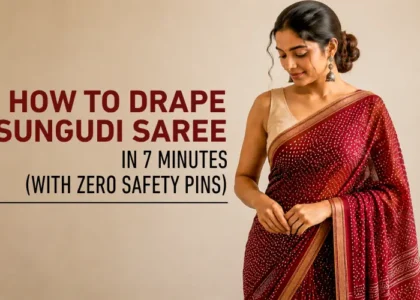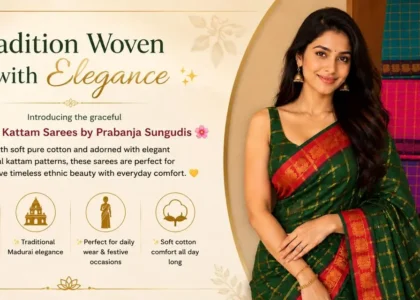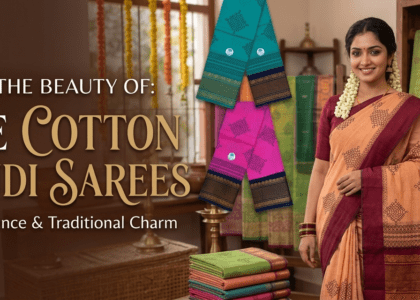

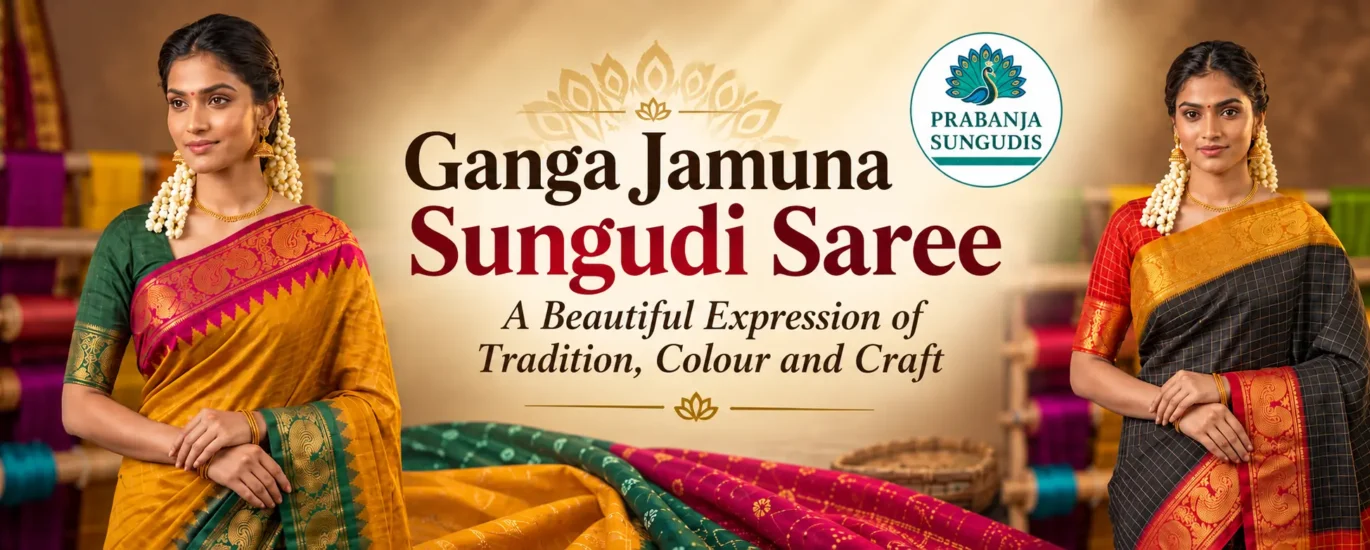
India’s saree traditions reflect the country’s rich cultural diversity, with every region contributing distinctive fabrics, weaving techniques, colours and designs. Among the traditional textiles of Tamil Nadu, Sungudi sarees are known for their comfortable cotton fabric, characteristic patterns and connection with the textile heritage of the region.
One particularly attractive style is the Ganga Jamuna Sungudi saree, recognised for its striking use of contrasting colours. The combination of a traditional Sungudi body with a contrasting border creates a saree that can look both graceful and vibrant.
Ganga Jamuna Sungudi sarees bring together colour, simplicity and traditional textile aesthetics, making them an interesting choice for women who appreciate Indian heritage clothing.
Shop the Ganga Jamuna Sungudi Collection
Prabanja Sungudi currently offers this design in two colour combinations:
| Design | Colour Combination | SKU |
|---|---|---|
| Ganga Jamuna Black | Black body with Yellow & Red border | PSGJY002 |
| Ganga Jamuna Mustard | Mustard Yellow body with Green & Red border | PSGJY001 |
Shop the Black Ganga Jamuna Saree → Shop the Mustard Yellow Ganga Jamuna Saree →
What Is a Ganga Jamuna Sungudi Saree?
A Ganga Jamuna saree is generally identified by its contrasting border, where the colours used in the border create a noticeable visual distinction from the main body of the saree.
When this design approach is combined with the traditional Sungudi aesthetic, the result is a Ganga Jamuna Sungudi saree. The body may feature traditional patterns such as checks or other understated textile designs, while the border introduces contrasting colours that frame the saree.
This contrast is what gives Ganga Jamuna sarees their distinctive visual character. Unlike heavily embellished sarees, their appeal often comes from the thoughtful combination of colours, patterns and traditional textile construction.
Understanding the Sungudi Tradition
Sungudi is closely associated with the textile heritage of Tamil Nadu, particularly the Madurai region. Traditional Sungudi textiles are appreciated for their cotton fabric and distinctive visual characteristics. Over time, Sungudi sarees have developed into an important part of the region’s traditional clothing culture.
The simplicity of cotton combined with carefully selected colours and patterns makes Sungudi sarees suitable for a variety of occasions. Modern versions may incorporate different colour combinations and border treatments while retaining the recognizable character associated with Sungudi sarees.
What Makes the Ganga Jamuna Border Special?
The border plays a particularly important role in a Ganga Jamuna saree. Rather than allowing the entire saree to remain visually uniform, the contrasting border creates a clear frame around the fabric.
Depending on the colour combination, the border can create very different impressions. A bright border can give a simple cotton saree a festive appearance, while deeper colours can create a more elegant and understated look.
The contrast also makes the saree easy to style with complementary jewellery and blouse colours.
Colours That Define Ganga Jamuna Sarees
- Yellow and red
- Green and red
- Blue and red
- Black and yellow
- Pink and green
- Maroon with contrasting bright shades
- Other complementary regional colour combinations
The choice of colour can significantly change the overall personality of the saree. Bright combinations can work particularly well for festivals and celebrations, while darker or more subtle combinations can be suitable for everyday traditional wear.
Black vs Mustard Yellow — Which Would You Choose?
| Feature | Black Ganga Jamuna | Mustard Yellow Ganga Jamuna |
|---|---|---|
| Visual character | High contrast, bold | Warm, traditional |
| Best paired with | Yellow, red, black or metallic accents | Green, red, mustard or gold accents |
| Good for | Festivals, evening functions | Poojas, daytime family gatherings |
View Black Saree → · View Mustard Saree →
The Appeal of Sungudi Cotton
Cotton is one of the major reasons traditional Sungudi sarees remain popular. Cotton sarees are generally valued for their lightweight feel, breathability and suitability for warm weather.
A cotton Sungudi saree can therefore offer a balance between traditional appearance and everyday comfort. The fabric can be suitable for different occasions, from regular ethnic wear to festivals, family gatherings and cultural events.
Small Checks and Traditional Patterns
Patterns play an important role in creating the character of a Sungudi saree. Small checks are one example of a simple pattern that can add visual texture without making the saree look excessively decorative.
A checked body combined with a contrasting border can create a balanced design: patterned body plus contrasting border equals a distinctive traditional appearance.
How to Style a Ganga Jamuna Sungudi Saree
Traditional Jewellery
For festivals and cultural occasions, Ganga Jamuna sarees can be paired with traditional jewellery such as jhumkas, bangles, necklaces and other ethnic accessories.
Contrasting Blouse
A blouse can either match the main body of the saree or pick up a colour from the contrasting border. For the black colourway, try a yellow or red blouse. For the mustard yellow colourway, try a green or red blouse. Explore both options here →
Minimal Everyday Styling
For everyday wear, the saree can be paired with simple earrings, a lightweight chain and minimal accessories.
Contemporary Styling
Ganga Jamuna Sungudi sarees can also be styled with contemporary blouse designs. Modern blouse styles can create a balance between traditional textile aesthetics and contemporary fashion.
Occasions to Wear a Ganga Jamuna Sungudi Saree
Festivals
Bright colour combinations and contrasting borders can complement the festive atmosphere.
Pooja and Religious Occasions
A traditional cotton saree can provide an elegant and comfortable choice for religious gatherings.
Family Functions
A Ganga Jamuna saree can be dressed up with jewellery and a carefully selected blouse for family celebrations.
Cultural Events
Regional textiles such as Sungudi can help create an authentic ethnic appearance for cultural programmes and traditional occasions.
Everyday Traditional Wear
The comfortable nature of cotton makes Sungudi sarees practical for regular ethnic dressing.
Ganga Jamuna Sungudi Sarees and Modern Fashion
Traditional sarees continue to evolve as fashion preferences change. Today’s saree wearers may combine traditional textiles with contemporary blouses, minimalist jewellery and modern accessories.
Ganga Jamuna Sungudi sarees are particularly suited to this approach because the basic design is visually distinctive without requiring extensive embellishment.
Why Traditional Cotton Sarees Continue to Matter
- Comfort
- Breathability
- Lightweight construction
- Versatile styling
- Traditional appeal
- Wide colour possibilities
- Suitability for warm climates
Sungudi adds another dimension through its regional textile identity and distinctive patterns. Together, these qualities make the Ganga Jamuna Sungudi saree an interesting example of how heritage and everyday fashion can coexist.
Caring for a Sungudi Cotton Saree
Proper care can help maintain the appearance and usability of a cotton saree. Always follow the care instructions provided with the individual saree, as dyeing, finishing and fabric characteristics can vary.
- Avoid harsh detergents.
- Wash according to the recommended care instructions.
- Separate strongly coloured garments when appropriate.
- Avoid prolonged exposure to direct sunlight.
- Store the saree in a clean, dry place.
- Fold and refold periodically when stored for long periods.
Appreciating the Character of Traditional Textiles
Traditional textiles may sometimes have small variations in colour, texture, weave or finishing. These characteristics can be part of the nature of traditionally produced textiles rather than an indication that every saree must look exactly like a machine-produced fabric.
For saree enthusiasts, such subtle variations can contribute to the individuality of a traditional textile.
Ganga Jamuna Sungudi Saree: Tradition That Fits the Modern Wardrobe
The Ganga Jamuna Sungudi saree represents an appealing combination of traditional textile aesthetics, contrasting colours and cotton comfort.
Its distinctive border creates visual character, while the Sungudi foundation connects the saree with the broader textile heritage of Tamil Nadu.
Whether worn during a festival, family gathering, cultural event or as part of everyday ethnic dressing, the Ganga Jamuna Sungudi saree demonstrates how a traditional textile can remain relevant in contemporary fashion.
For women who appreciate regional Indian textiles, colourful borders and comfortable cotton sarees, Ganga Jamuna Sungudi sarees offer a simple yet expressive way to celebrate traditional Indian clothing.
FAQs
What is a Ganga Jamuna Sungudi saree?
A Ganga Jamuna Sungudi saree is a Sungudi saree featuring a contrasting border that creates a distinctive colour combination between the saree body and border.
Why is it called Ganga Jamuna?
The term Ganga Jamuna is commonly used in Indian textile traditions to describe contrasting colours or colour combinations, often particularly noticeable in the border or edges of a garment.
Is Ganga Jamuna Sungudi saree made from cotton?
Sungudi sarees are traditionally associated with cotton textiles. Cotton provides a lightweight and breathable wearing experience that is particularly suitable for warm climates.
What makes Sungudi sarees special?
Sungudi sarees are appreciated for their traditional textile character, cotton comfort, distinctive patterns, colour combinations and connection with the textile heritage of Tamil Nadu.
Can Ganga Jamuna Sungudi sarees be worn daily?
Yes. Cotton Sungudi sarees can be suitable for everyday traditional wear because of their lightweight and breathable characteristics. They can also be styled for festivals, family gatherings and cultural occasions.
How can I style a Ganga Jamuna Sungudi saree?
A Ganga Jamuna Sungudi saree can be styled with traditional jewellery, a contrasting or matching blouse and simple ethnic accessories. Contemporary blouse designs can also be used.
Are Ganga Jamuna Sungudi sarees suitable for festivals?
Yes. Bright colour combinations and contrasting borders can make Ganga Jamuna Sungudi sarees suitable for festivals, pooja occasions, cultural events and family celebrations.
How should I care for a Sungudi cotton saree?
Follow the care instructions supplied with the saree. In general, avoid harsh detergents and prolonged direct sunlight, and store the saree clean and dry.
What colours are currently available in the Ganga Jamuna Sungudi collection?
Prabanja Sungudi currently offers this design in black with yellow and red border, and mustard yellow with green and red border.
Does the saree come with a blouse piece?
Yes, an unstitched blouse piece is included with the saree.